7 Steps to Brand Your Business Successfully (With Real-Life Examples)
INTRODUCTION
According to a 2024 survey, 81% of consumers say they must be able to trust the brand to do what is right making trust the #1 factor in purchasing decisions.
In today’s competitive landscape, brand building isn’t just about visibility, it's about credibility.
So, why does building the brand matter so much in 2025?
Why Branding Matters More Than Ever in 2025?
A 2023 PwC report revealed that 59% of global consumers prefer to buy from brands they’re familiar with, and 64% say shared values are the main reason they form brand relationships.
Take Apple, a masterclass in brand trust and innovation, or Airbnb, which leads with purpose-driven messaging centered around community and belonging.
In this evolving market, strong branding isn’t just a strategic asset- it’s a survival strategy.
And the good news?
You don’t need a global budget to do it. You can start with the these 7 Steps to Brand Your Business Successfully.
Step-by-Step: Brand Your Business Successfully with These 7 Strategies
Step 1 – Define Your Brand Purpose and Values
A clearly defined brand purpose is more than a mission statement. It answers the core question:
Why does your brand exist beyond profit?
94% of global consumers say they are more likely to be loyal to a brand that is transparent about its values.
To define your purpose and values effectively:
-
Identify the impact your brand aims to make.
-
Align your values with your audience’s beliefs.
-
Ensure internal teams and external messaging reflect these consistently.
Pro Tip: Document a clear purpose statement and 3–5 brand values. Use them to guide your content, hiring, partnerships, and customer interactions.
Example: Patagonia exemplifies purpose-led branding.
With its mission “We’re in business to save our home planet”, Patagonia aligns every aspect of its operations with environmental responsibility.
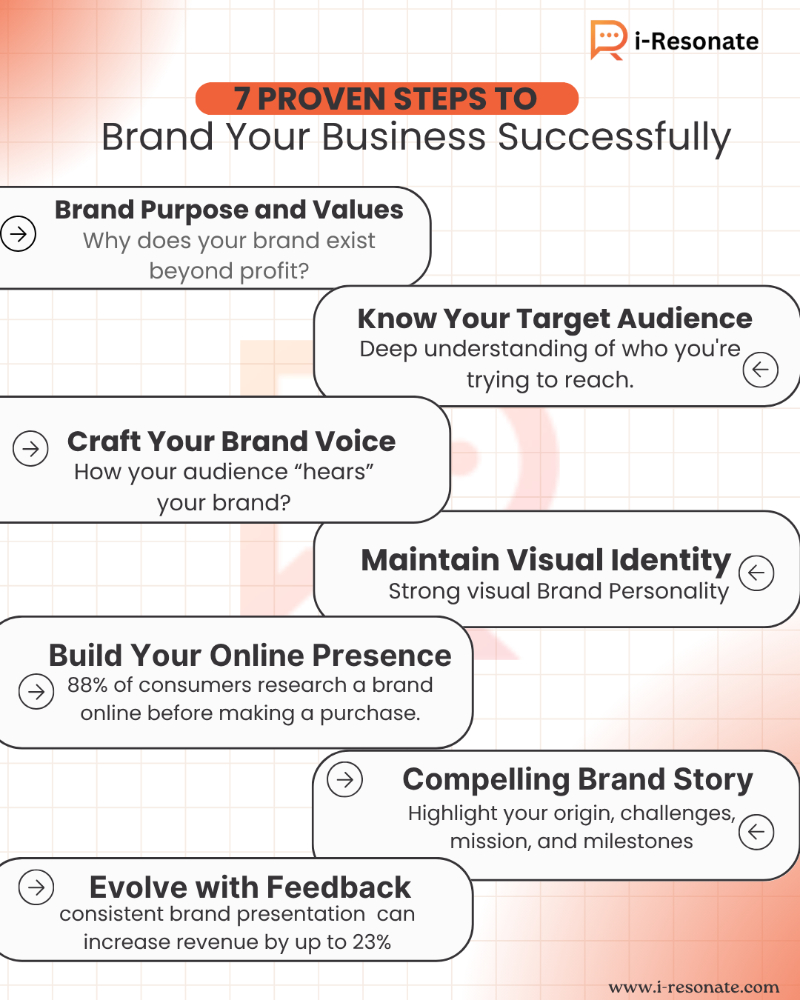
STEP 2 – Know Your Target Audience
Without a clear picture of your audience, your messaging will miss the mark, no matter how visually polished or well-written it is.
According to HubSpot, buyer personas make websites 2–5 times more effective and easier to use by targeted users
-
Speak their language.
-
Address their needs.
-
Deliver value where they are.
Pro Tip: Use tools like Google Analytics, Meta Insights and ContentCraft to analyze audience behavior and fine-tune your brand messaging accordingly.
Example: Glossier built a cult-following by co-creating with its audience. By using surveys, social listening, and feedback loops, they developed products based on real consumer input.
STEP 3 – Craft Your Brand Voice and Personality
Your brand voice is the consistent tone and attitude your brand uses to communicate.
It's how your audience “hears” your brand across content.
Example: Mailchimp is a great example of voice done right. Its friendly, conversational tone makes complex marketing tools feel approachable—even fun. Their content consistently reflects this voice, making them stand out in a crowded SaaS market.
Step 4 – Design a Memorable Visual Identity
Your visual identity is often the first impression your brand makes and it speaks louder than words.
A strong visual identity should be:
-
Simple and recognizable
-
Consistent across platforms
-
Scalable for any format—from mobile screens to billboards
According to a 2024 Venngage report, brand recognition can increase by 80% when using a consistent color scheme and visual language across all channels.
Example: Nike sets the gold standard in visual branding. Its clean, minimalist design, powerful “Just Do It” tagline, and iconic swoosh logo instantly evoke empowerment and performance values at the core of its brand identity.
Step 5 – Build Your Online Presence
According to Forbes, 88% of consumers research a brand online before making a purchase.
To build a strong online presence:
-
Create a user-friendly website that reflects your brand voice and visual identity
-
Optimize for mobile and SEO to increase visibility and reach
-
Maintain consistency across channels—website, Instagram, LinkedIn, YouTube, X, and more
Pro tip: A unified online presence builds credibility, trust, and brand loyalty over time.
Example: Duolingo excels in building a recognizable and consistent brand across all digital touchpoints.
Step 6 – Tell a Compelling Brand Story
People remember stories- not features.
Stories humanize your brand, build emotional connections, and differentiate you in a crowded marketplace.
Your brand story should:
-
Highlight your origin, challenges, mission, and milestones
-
Be authentic, relatable, and aligned with your brand voice
-
Show customers the value they’re part of by choosing your brand.
Example: TOMS Shoes built its brand around a simple, powerful story: “One for One.” For every pair of shoes sold, one was donated to a child in need. This narrative not only sparked emotional connection but became central to the brand’s identity—driving loyalty and advocacy.
Pro Tip: Weave your story into your website’s “About” page, product descriptions, social media content, and even ad campaigns.
Step 7 – Stay Consistent and Evolve with Feedback
Branding doesn’t end once you’ve launched—it’s an ongoing process.
Here's how to stay on track:
-
Maintain brand consistency across every channel, from social posts to email campaigns
-
Use audience feedback and analytics to refine tone, visuals, and messaging
-
Monitor trends to stay relevant without compromising core values
Example: Brands like Spotify continually refine their brand voice, visuals, and campaigns based on user behavior and feedback—while staying true to their identity as a creative, user-first tech brand.
CONCLUSION
To build a brand that lasts, consistency, clarity, and customer connection must be at the core of everything you do.
By following these 7 PROVEN Steps to Brand Your Business Successfully, you’re not just building a visual identity—you’re crafting a shaping perception that drives loyalty and growth.
For more such informative : www.i-resonate.com/blogs


anchal
I'm Anchal Mogha, an SEO Expert and Digital Marketer with a strong background in business development . With an MBA in Marketing and Business Analytics, I blend data-driven strategies with creative storytelling to help Brands grow Online.