Why is Bias in HR Documents so common?
INTRODUCTION
Before we talk about why bias in HR documents is so common, let us first get clear on what we actually mean by it.
Because it is rarely what most people picture.
It is not a deliberately offensive statement. It does not usually look wrong at first glance.
Bias in HR documents is the presence of language, framing and assumptions that intentionally or not favour some groups of people over others.
It lives in the job description that was never questioned. The performance review template that has been used for a decade. The policy document that was written with one type of employee in mind and never updated to reflect everyone else.
Google paid $3.8 million for it. Amazon paid $1.5 million. Microsoft paid $2.2 million.
None of these were careless organisations. None of them set out to discriminate. But the bias was in the process and the process lived inside the documents their teams produced every single day.
That is the part worth understanding before anything else.
Why is Bias in HR Documents so common?
Understanding why bias appears in HR documentation is the first step toward building more inclusive and professional communication within organizations.
1. HR Documents are reused for years
One of the biggest reasons bias exists in HR documents is template reuse.
Most organizations reuse Job description templates, Offer letter formats, HR policy documents or any Internal communication templates.
If biased language existed in the original document, it continues to appear in every new document created from that template. Over time, this becomes part of the organization’s standard documentation language.
So yes, Bias often spreads through templates, not through people.
2. Unconscious bias in Language
Many HR professionals do not intentionally write biased content. However, unconscious bias in language is very common.
Examples include:
-
“Young and energetic team”
-
“He will be responsible for…”
-
“Native English speaker required”
-
“Aggressive sales professional”
-
“Chairman”
-
“Manpower”
These phrases may sound normal, but they can unintentionally exclude certain groups of people. This is known as unconscious bias in HR writing.
3. Old Policies in Modern Workplaces
Many HR policies and documents were written years ago, but workplaces have changed significantly:
-
More diverse workforce
-
Inclusive hiring practices
-
New compliance requirements
-
Data privacy regulations
Old HR documents may not reflect modern workplace language and inclusivity standards, which is why bias often exists in legacy HR documentation.
4. HR Documents are not reviewed for bias
Most organizations review HR documents for Grammar and Formatting. But very few organizations review documents for Inclusive language, Compliance risk, Bias detection.
Because bias review is not part of the standard document review process, biased language often goes unnoticed.
5. Lack of use of AI and a proper review system
One of the major reasons bias in HR documents is still common is the lack of structured document review systems and limited use of AI tools in the documentation process.
In many organizations, HR documents are created using old templates or copied from previous documents. Once the document is written, it is usually reviewed only for basic things like grammar, formatting or approvals.
Very rarely are documents reviewed for bias, inclusive language, tone, privacy risks or compliance wording.
This is where a proper review system becomes important.
See how ProofLex works for teams- VISIT HERE
How Organizations Can Reduce Bias in HR Documents
Understanding why bias exists in HR documents is only half the work. The other half is building a process that actually catches it consistently, before it shapes a decision.
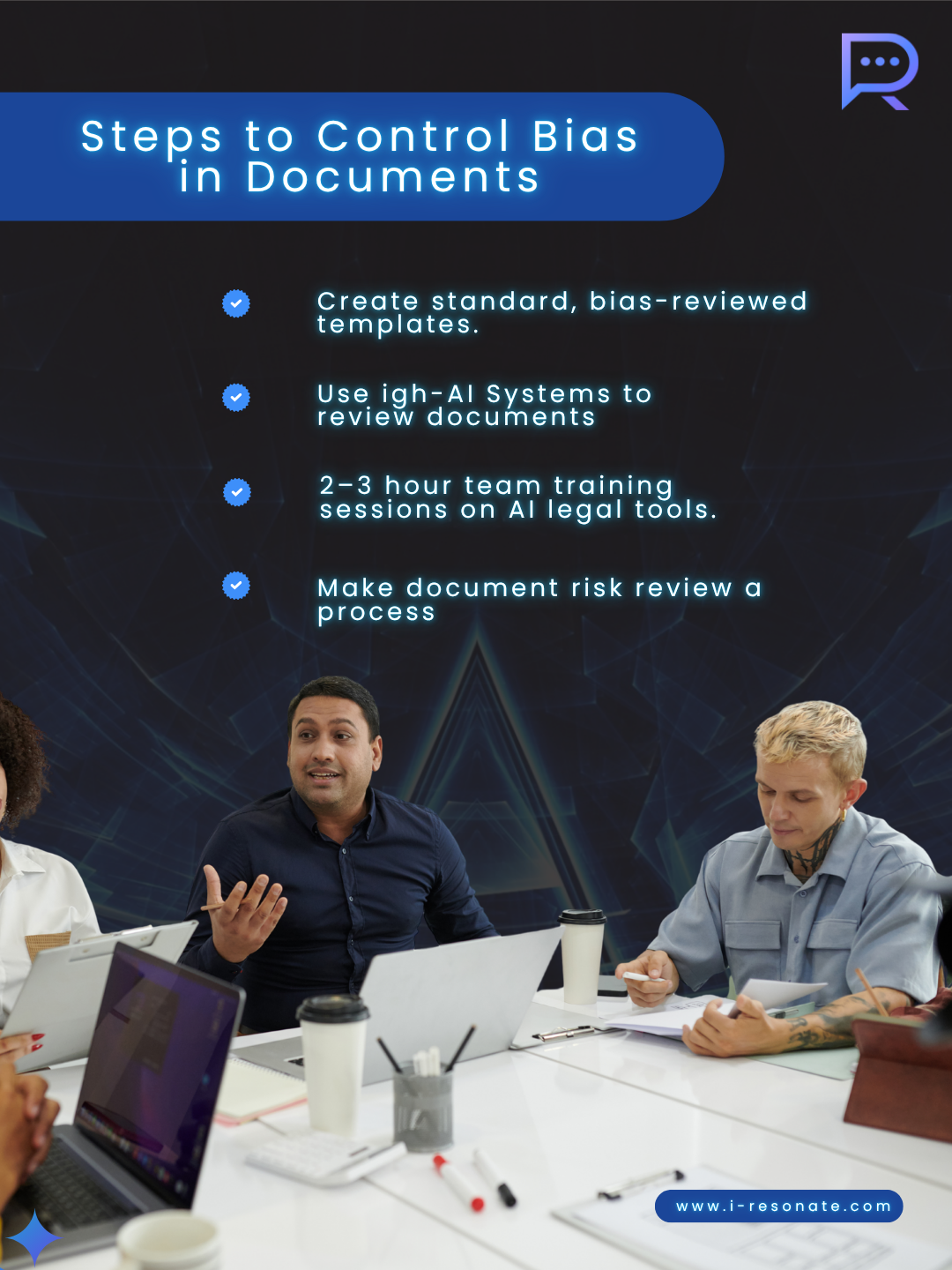
1. Update HR Document Templates Regularly
The problem with an outdated template is not just that it carries old language. It is that every document built from it inherits the same blind spots automatically, at scale.
Fix the template and you fix every document that follows it.
2. Use Inclusive and Neutral Language
Small wording changes make a significant difference not just for inclusion but for legal protection and professional credibility.
For example:
| Instead of | Use |
|---|---|
| "Young and energetic team" | "Fast-growing, dynamic team" |
| "He will manage the team" | "They will manage the team" |
| "Native English speaker" | "Strong English communication skills" |
| "Man the floor" | "Oversee daily operations" |
Same meaning. Wider reach. Lower legal risk.
3. Train HR Teams on Unconscious Bias in Writing
Most bias in HR documents is not deliberate. It comes from habits, copied templates and the natural limits of writing from a single perspective.
Training HR teams on what unconscious bias in writing actually looks like not in theory but in real document examples reduces bias before the first word is written.
4. Make Document Review a Process
In most organisations document review happens at the end, under deadline pressure, by someone who is checking for accuracy and grammar rather than fairness and inclusion.
That is not a review process. That is a final read before sending.
Organisations that take this seriously build bias review into the document production process itself as a standard step, not a reaction to something going wrong.
5. Use AI Document Review Tools for Bias Detection
This is no longer a future consideration. It is a present one.
AI tools can now review documents consistently across every template, every department, every team and detect what human reviewers miss when they are too familiar with the language to see it clearly.
What AI document review can catch:
- Biased and gendered wording
- Non-inclusive phrases
- Legal risk language
- Privacy and compliance issues
- Tone inconsistencies
- Complex or unclear sentences
- Plagiarism and content similarity
The future HR documentation process looks like this:
Write → AI Review → HR Review → Legal Review → Final Document
Each stage catches what the previous one missed. Together they produce documents that are accurate, compliant, inclusive and legally sound.
Conclusion
Bias in HR documents is common because the systems that produce HR documents were never built to catch it.
The most important question your organisation can ask today is not "Are our people biased?"
It is "Does our process catch bias before it shapes a decision?"
That question asked seriously and answered honestly is where genuinely inclusive organisations begin.
How does your organisation currently approach bias detection in HR documents?
Hope you had a good reading!


anchal
I'm Anchal Mogha, an SEO Expert and Digital Marketer with a strong background in business development . With an MBA in Marketing and Business Analytics, I blend data-driven strategies with creative storytelling to help Brands grow Online.